
 Contact Us

Appliance CNC Machining Services for Precision Parts


Table of Contents

Appliance CNC Machining Services for Reliable Appliance Components
Home appliances are dependent on the parts that fit, can withstand daily use, and meet design requirements. From washing machines to coffee makers, every product has its components with various shapes, materials, and tolerances. Appliance CNC Machining Services will help manufacturers create these components out of metal and engineering plastics with regulated dimensions.
Yanmee offers 3-axis, 4-axis, and 5-axis machining, CNC turning, and mill-turn. These services are used in prototypes, bridge production, and large production runs, based on the part requirements.
CNC Machining is Important to Home Appliances
CNC machining for appliances helps support structural and functional parts. Components can contain motors, drive assemblies, or guard internal systems, or can provide connections between various parts of a product. Their size has an impact on alignment, noise, vibration, and assembly time.
Household Appliance CNC Machining can be used in cases where a part needs precise holes, flat mounting areas, threaded areas, or complex contours. CNC machines adhere to programmed tool paths, which assists in maintaining consistency when machine settings, tools, and inspection techniques are kept in check.
Common applications include:
- Washing machine shafts and brackets, motor mounts.
- Fridge fittings, support frames, and chosen housings.
- Assembling and disassembling dishwashers.
- Oven control-panel supports.
- Blade mounts and drive parts of blenders.
- Proper fittings and internal coffee machine pieces.
Each section must have an appropriate process that suits its shape and purpose. Material choice, production quantity, and tolerance needs affect the final manufacturing plan.
Appliance Component CNC Processes
Complex Shapes CNC Milling
CNC milling is a machining process that uses rotary tools to cut material off a fixed workpiece. It creates pockets, slots, flat faces, holes, and curved surfaces. Milling is applied to brackets, housings, support plates, and custom appliance parts by manufacturers.
Three-axis machining is appropriate for most parts that have features that are available in a single direction. The four-axis machine brings in rotary movement, and the five-axis machining can access numerous surfaces using a few setups. Reduction of setups can help in minimizing alignment errors on complex components.
Round Part CNC Turning
CNC turning is a process whereby the workpiece is rotated using a cutting tool that cuts its surface. It fits pins, spacers, threaded fittings, and shafts. When appropriate tooling and cutting settings are employed, the process can yield consistent diameters.
Mill-turn machines are machines that are used to perform milling and turning. This technique has the potential to reduce handling when a component needs both milled surfaces and round features.
CNC Drilling and Hole Finishing
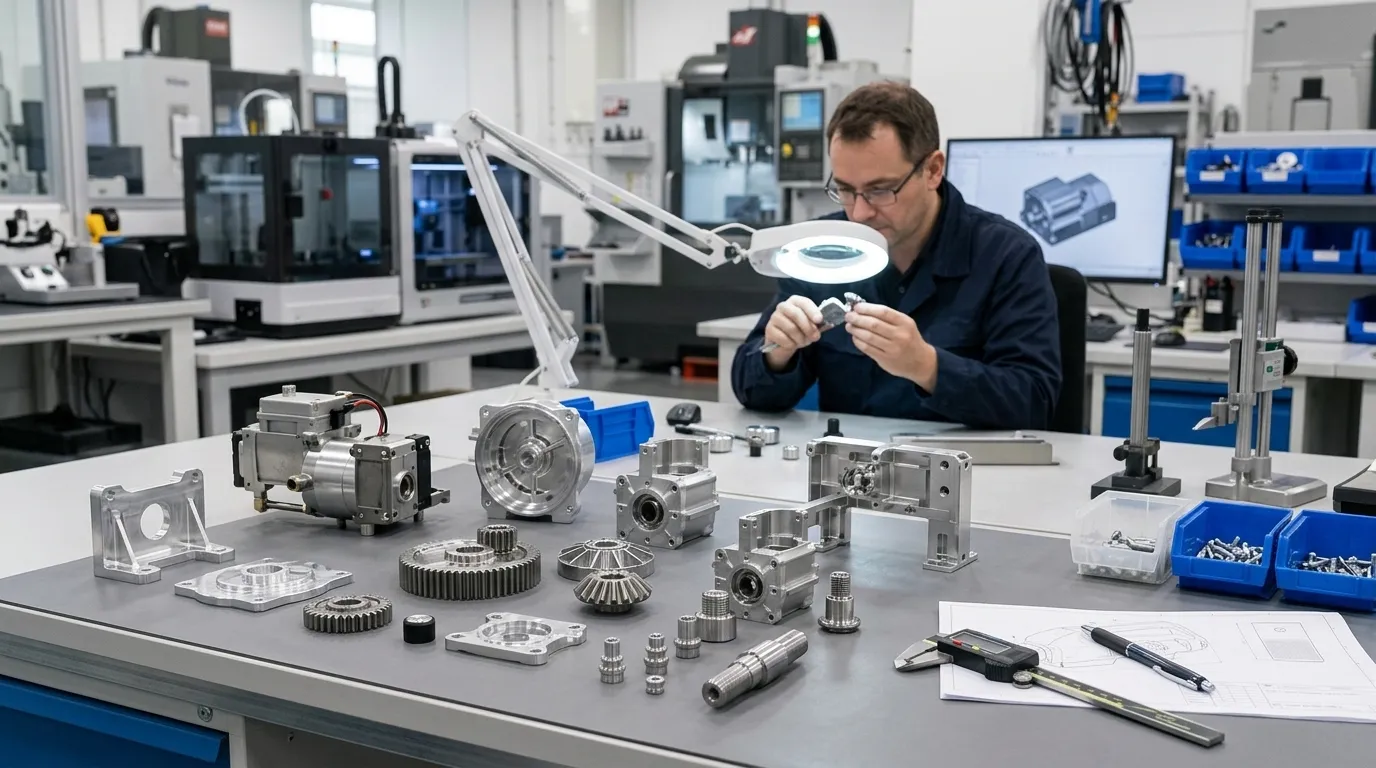
CNC drilling is used to drill holes in fasteners, pins, cables, and fluid connections. The location of the holes is critical when the parts need to fit with the motors, pumps, sensors, or frames. Boring or reaming may help to increase the size of the holes and finish where the design requires greater control.
CNC Machining Materials of Home Appliance Parts
The strength, weight, corrosion resistance, heat performance, and cost of machining depend on the choice of materials. Depending on the working conditions of the component, metals and engineering plastics can be used in Home Appliance CNC Machining Services.
- Lightweight brackets, housings, and support components are suitable for aluminium alloys. Good machinable grades such as 6061 offer a good balance of strength and weight.
- Stainless steel suits fittings and parts that are in contact with moisture. An example is Grade 304, where corrosion resistance is a consideration, but it remains dependent on the operating environment.
- Carbon steel is used to make many load-bearing parts, brackets and shafts. Some grades have a protective coating to reduce rust when used.
- Plastics such as POM, nylon and PEEK are designed to accommodate some low-friction, lightweight or electrically insulating components. Their wear characteristics, stiffness, and heat resistance depend on their grade.
Engineers should consider heat, moisture, friction, cleaning agents, and mechanical loads before approving materials. Parts used in close contact with food, water, or electrical systems may also need further validation with respect to pertinent product requirements.
Surface Finish, Tolerances, and Quality Checks
Appliance Component CNC Machining needs to adhere to the dimensions and limits mentioned in the engineering drawing. A tolerance is a deviation that is allowed in a certain measurement. Sealing faces, aligned mounting holes, bearing seats, and shafts may have tight tolerances.
High-precision component machining starts with clear CAD files, appropriate datums, and realistic limits. Not all surfaces need the same precision, as unnecessary precision will increase machining time and inspection expenses.
Quality checks can involve:
- Common dimension calipers and micrometers.
- Complex shape and position of features: coordinate measuring machines.
- Pin gauges and thread gauges for holes and threaded features.
- Surface roughness testers to achieve given levels of finish.
- Checks for burr, scratch, and tool marks.
Finishing can be surface deburring, polishing, bead blasting, or anodising. The proper finish is determined by the material, look, corrosion requirements, and the use of the part.
Small Production Runs to Appliance Prototypes
Appliance Prototype Machining assists engineers in testing a design prior to giving the green light to larger quantities. A machined prototype can point to fit issues, poor mounts, poor access, or internal component interference.
This stage helps in making design changes when the teams have time to make changes in the CAD model. Prototype testing cannot replace formal electrical, thermal, or product safety testing, which may test dimensions and assembly.
Small-Batch CNC Manufacturing is appropriate for pilot runs, product tests, spares, and early demand. Products that require custom parts but do not require large tooling can also be supported by Low-Volume CNC Machining Services.
A good workflow comprises:
- Check the design: Dimensions, wall thickness, tool access, and assembly.
- Confirm materials: Check each material's load, heat, and moisture requirements.
- Choose the process: Milling, turning, drilling, or combined machining.
- Test the first part: Measure key characteristics and then generate the subsequent batch.
- Review assembly: Check fit, access, and connections to associated parts.
- Order repeat: Check quantity, completion, inspection requirements, and delivery steps.
The process helps in detecting manufacturing issues prior to their ability to affect more parts by the teams.
Choosing a CNC Machining Partner
The right supplier should know the purpose of the part, design limitations, and the desired quantity of production. Examine the potential kinds of machines, materials, finishes, inspection equipment, and knowledge of other related parts.
We offer 3-axis, 4-axis, and 5-axis CNC machining, turning, and mill-turn of metal and engineering-plastic parts. Our services include prototype, bridge, and production quantities based on the needs of the project.
The processes available can be seen on the CNC machining services page. Include your drawings and requirements when you are requesting a quote, especially when the part has tight tolerances or complex features.
Conclusion
The specifications of the appliance parts should be in terms of fit, strength, finish, and operation. The right machining process assists engineers in managing these factors from the initial prototype up to repetitive production. Unnecessary design changes can also be minimized by material selection, real-world tolerances, and preliminary inspection.
China Rapid Prototype will be able to look over your drawings, material requirements, and production quantities to find appropriate machining options. Dial Yanmee and discuss your new appliance component and develop a manufacturing route that suits its engineering requirements.
- PREV: Null
- NEXT: Null
Talk to the Manufacturer, Not a Middleman
Resources & Insights
-
Blog
Household Appliance Prototyping Services: From Concept to Market-Ready Products
2026-10-26By -
 Blog
Rapid Prototyping 3D Printing- Methods, Materials, Process and How to Choose
2026-10-23By -
 Blog
Sheet Metal Forming - Processes, Materials, Thickness and Design Guide
2026-10-23By -
 Blog
Low Volume Appliance Manufacturing Methods and Processes
2026-10-23By


