
 Contact Us

Appliance Prototype Manufacturing for Home Appliances


Table of Contents

Appliance Prototype Manufacturing: From Concept to Product
A new appliance might appear complete on screen and fail in assembly or use. The buttons can be too close to the casing, the internal components can come into conflict, or the vents can limit airflow. Physical models assist the teams in locating problems prior to investing in production tools. Appliance Prototype Manufacturing converts CAD designs into components that can be handled, measured, fitted, and tested by the engineers.
A prototype assists teams in evaluating size, grip, surface finish, and control layout with users. This work is supported by Yanmee using prototype manufacturing, 3D printing, vacuum casting, sheet metal fabrication, and finishing. Every process is appropriate to design objectives, materials, and test requirements.
The Importance of Physical Prototypes
Household Appliance Prototyping bridges the gap between digital design and real-life checks. A physical model allows teams to check shape, fastening, part fit, and user interaction. Consumer Appliance Prototyping assists in kitchen appliances, cleaning devices, climate-control appliances, personal-care appliances, and smart-home appliances.
The material, process, and the level of detail should be directed by the purpose. Prototypes can check proportions, button reach, assembly fit, cable routes, airflow, and service access.
Choosing the Appropriate Prototype Process
There are a number of techniques that can be employed in Appliance Product Prototyping. The optimal decision varies based on the part shape, material, order size, surface requirements, and test plan.
- CNC machining involves cutting a solid block to produce precise parts. It fits hard brackets, motor mounts, shafts, housings, and threaded components. It can be applied in cases where the prototype requires consistent dimensions or assembly.
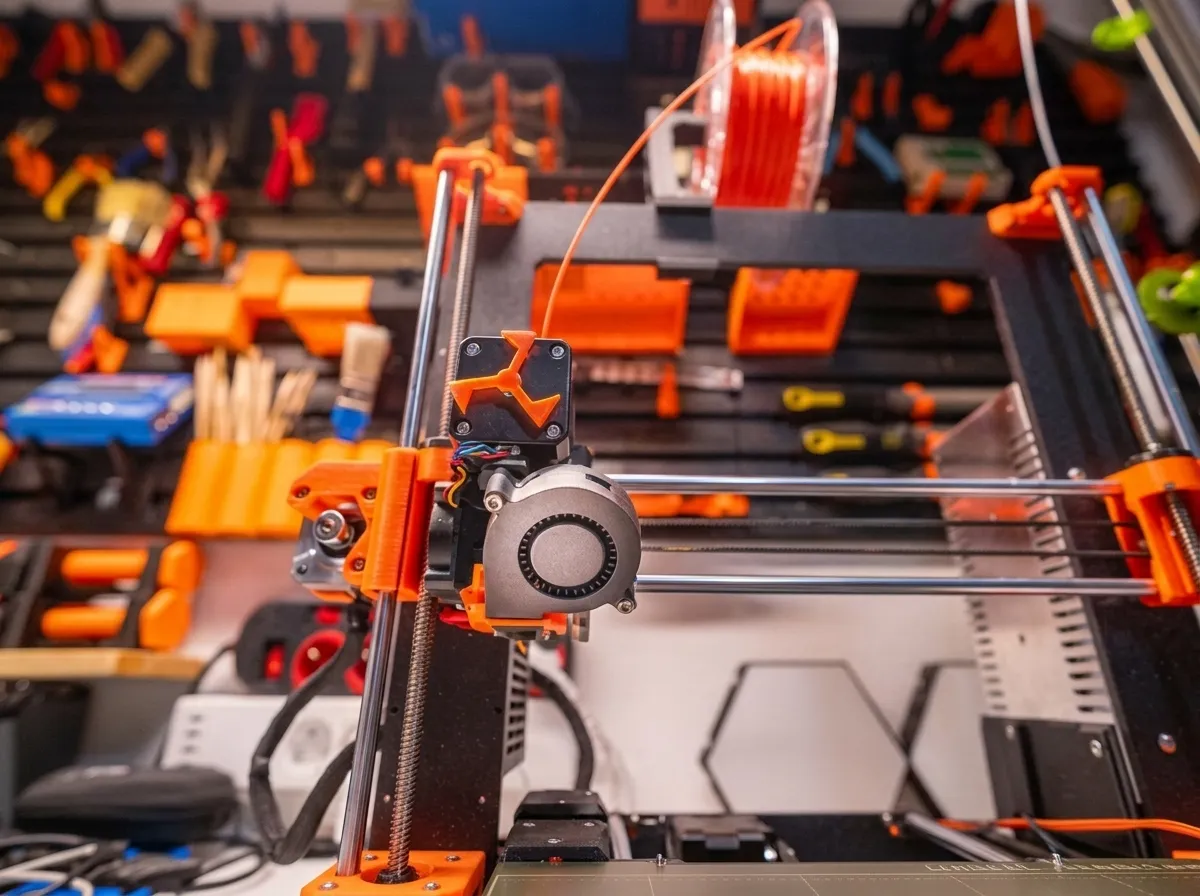
- The 3D printing process is a layer-by-layer creation of a part based on a digital model. It can generate complicated shapes, initial concept models, and components to check quick fits. The correct printing process varies based on the strength, heat exposure, finish, and dimensional requirements.
- Vacuum casting involves a master pattern and a mould to produce small batches of resin parts. It can assist teams in comparing housing shapes, colors, textures, and assembly fit prior to investing in hard tooling.
- Panel, bracket, frame, and enclosure support are supported by sheet metal fabrication. Many formed metal components used in appliances are made in the form of laser-cut, bent, and joined parts.
- Products that have plastic shells, metal supports, clear covers, and control parts can be combined using these methods. Compare home appliance prototyping services and rapid prototyping services to consider process options.
Between Appliance Concept Prototyping and Design Checks
Appliance Concept Prototyping allows teams to review shape and layout prior to detailed engineering being finished. The initial models are evaluated based on size and user experience instead of complete functionality.
- During Home Appliance Prototype Development, engineers test mounting points, moving parts, seals, and internal clearances. Solid models are defined in STEP files, and 2D drawings can specify tolerances, threads, and finish requirements.
- Home Appliances Functional Prototypes require components that are appropriate to the intended test. A motor bracket might require metal to be stiff, and a control-panel mock-up might require printed plastic to check the position of buttons.
- A prototype must not be considered as evidence of electrical or product safety unless the necessary tests have been done.
Choice of Material, Tolerances, and Inspection
The choice of material influences the weight, strength, heat resistance, wear, and cost. Aluminium can be used in light structural components and machined housings. Stainless steel may be used in components that are in contact with water, and ABS, PC, nylon, and POM may be used in various housing and mechanical applications. The grade chosen should be suitable to the desired load and temperature.
Tolerance planning is important since every tolerance determines the allowed variation in size. Close tolerances should be on features that influence fit, movement, sealing, or alignment. Coating them on all surfaces may increase expenses without enhancing functionality.
Prototypes of appliance engineering should correspond to accepted CAD files and drawings. Checks can be done with calipers, micrometers, pin gauges, thread gauges, coordinate measuring machines, and visual inspection. The inspection is to be done on features that influence assembly and testing.
Before Tooling Appliance Design Validation
Appliance Design Validation identifies faults when the changes are still manageable. Engineers are able to test access to fasteners, button travel, panel gaps, airflow, and thermal behavior. Document all the test goals, setup, results, and necessary design changes, and rebuild the CAD model and update it.
Formal safety testing is not substituted by prototype testing. Heated products, mains-powered products, products with moving blades or pressure systems must have appropriate risk reviews prior to release.
Towards Small-Batch Builds
- Appliance Component Prototyping includes handles, control panels, brackets, vents, and motor housings. These are Prototype Parts of household appliances that can be assembled to test fit throughout the product.
- Consumer Product Prototype Manufacturing can move to a pilot batch. This assists teams in evaluating repeatability, assembly procedures, finish consistency, and inspection requirements prior to tooling.
In the case of Custom Appliance Prototyping, submit 3D CAD files, 2D drawings, material, quantity, finish, critical dimensions, and planned tests. Indicate whether components are for appearance, assembly, or functional checks.
Choosing an Engineering Partner
The services that should be offered by Appliance Prototype Development Services are process selection, material advice, finishing, dimensional checks, and assembly support. Yanmee provides CNC machining, 3D printing, vacuum casting, sheet metal fabrication, surface finishing, and low-volume builds. These Appliance Manufacturing Solutions assist in the support of kitchen appliances, cleaning equipment, personal-care products, and climate-control devices. Consider CNC machining services for parts that require controlled dimensions or engineering plastics.
Upon asking a quote, provide files, and discuss the purpose of each part. This assists in evaluating geometry, tolerances, materials, and the production path.
Conclusion
An effective prototype is not just a demonstration of what an appliance might resemble. It assists teams in verifying fit, handling, airflow, material, and assembly prior to investing in costly tooling. Appliance Product Development is most effective when the product of each build is the response to a specific engineering question and the output of the subsequent design modification.
Send Yanmee your CAD files, target materials, and test objectives via the project enquiry page. The team will be able to examine your needs and assist in planning the subsequent prototype construction.
- PREV: Null
- NEXT: Null
Talk to the Manufacturer, Not a Middleman
Resources & Insights
-
Blog
Household Appliance Prototyping Services: From Concept to Market-Ready Products
2026-10-26By -
 Blog
Rapid Prototyping 3D Printing- Methods, Materials, Process and How to Choose
2026-10-23By -
 Blog
Sheet Metal Forming - Processes, Materials, Thickness and Design Guide
2026-10-23By -
 Blog
Low Volume Appliance Manufacturing Methods and Processes
2026-10-23By


