
 Contact Us

CNC Rapid Prototyping for Home Appliances


Table of Contents

CNC Rapid Prototyping for Home Appliances
The design of home appliances should be able to balance appearance, safety, comfort, and reliable functioning. A washing machine requires stable supports and properly fitted panels, whereas a coffee maker requires precise controls and heat-sensitive components.
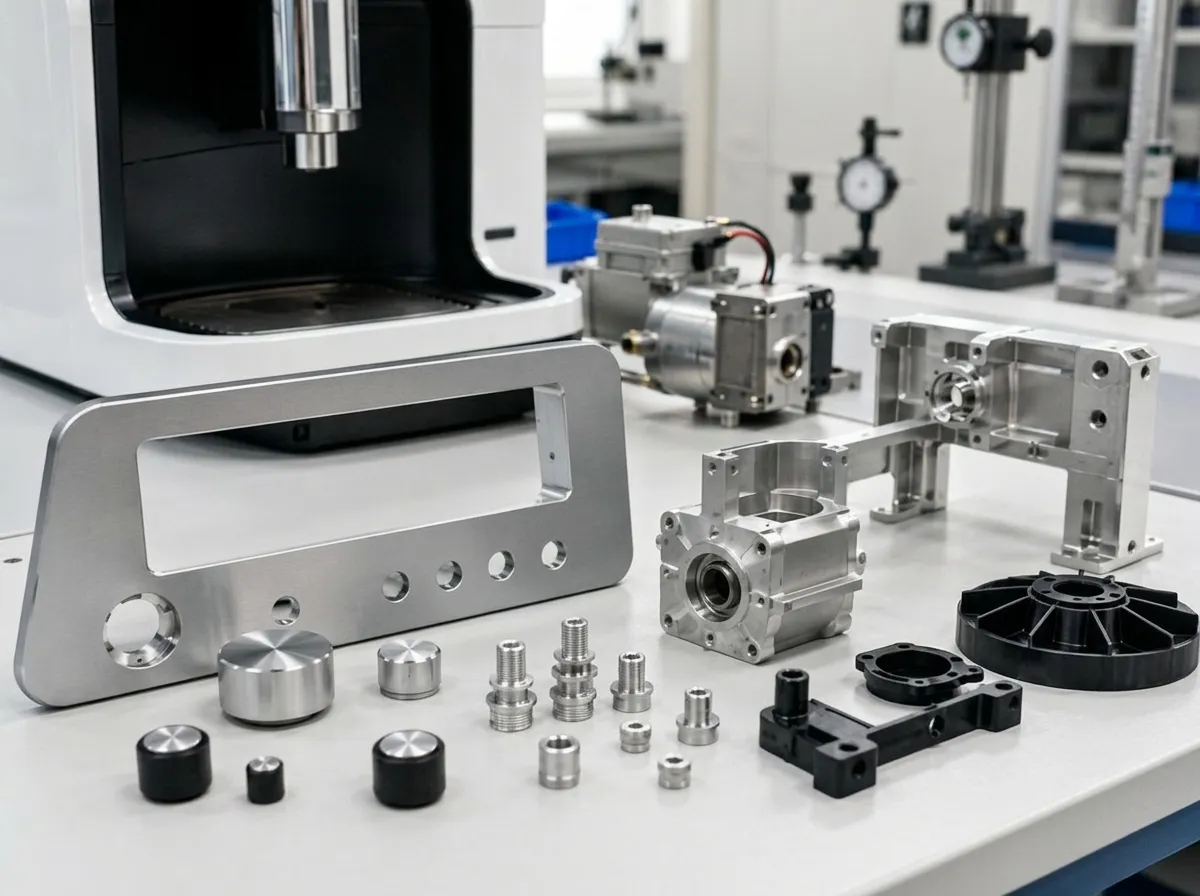
CNC Rapid Prototyping for Home Appliances provides product teams with a direct means of testing parts produced out of actual engineering materials. Computer Numerical Control (CNC) machining is a machining process that uses a computer-controlled tool to cut metal or plastic stock in the desired shape. This is handy for brackets, housings, shafts, knobs, fixtures, and other parts that require precise measurements.
In the case of appliance groups, it is not just to make a sample. It is to verify that the design can be assembled, used, tested, and manufactured as intended, before full production costs start to increase.
The Importance of CNC Prototypes in Appliance Design
There are a lot of components of household products that are crowded into a narrow space. Even a cover, a seal, a motor mount, or a control panel can be impacted by a few millimetres of error. CNC prototyping is used to make parts that assist engineers in comparing the CAD model to the actual assembly conditions.
This prototype mechanical component can be used to support kitchen appliances, cleaning equipment, personal-care devices, refrigerators, and climate-control products. The right part and process are based on the desired test, material chosen, and the operating conditions of the product.
The Process of CNC Rapid Prototyping
- This begins with a 3D CAD model and requirements. Designers typically deliver STEP, STP, or IGES files, and 2D drawings of critical dimensions and tolerances. The engineering department examines the model in terms of accessibility to tools, thin walls, deep pockets, internal corners, and other areas that can increase cost.
- The design is then translated into machine instructions by CAM software. The CNC machine cuts off material using rotating cutting tools or turning tools, based on the geometry of the part. Three-axis milling is well adapted to flat and prismatic components, whereas four-axis and five-axis machines can access more faces with fewer setups.
- Final inspection checks compare key dimensions to the drawing. This can be calipers, micrometers, height gauges, or coordinate measuring machines (CMMs), depending on the project.
Select Materials to Use in the Test, Not the Shape
The selection of material influences strength, weight, heat response, wear, finish, and cost of machining. Lightweight housings, brackets, and structural parts are frequently made of aluminum alloys. Stainless steel is used in components requiring corrosion resistance, and brass may be used in some fittings and conductive components.
Engineering plastics also play a major role. ABS can be adapted to housings and visual models, and polycarbonate can be selected where impact resistance or transparency is of concern. POM, or acetal, has low friction and dimensional stability in gears, guides, and moving parts.
Tolerances, Fit, and Quality Checks
All features do not require the same tolerance. A motor mount, seat bearing, or shaft interface can require a tighter fit than a cosmetic cover. Excessively narrow tolerances may raise the machining time and inspection expense with no enhancement in product performance. Critical dimensions, datum points, hole positions, thread details, and surface finish requirements should be identified in drawings.
Checking dimensions is not the only way to validate product design. Functional prototype testing can also check airflow, moving components, or simple load response. Electrical and high-temperature testing needs appropriate materials, controlled procedures, and certified safety inspection.
CNC Machining or Some Other Prototype Process?
CNC machining is a good option when a component requires precise interfaces, hardened material, or a close replica of a machined production component. It also facilitates custom prototype machining when few parts are needed.
- 3D printing is appropriate when there is a need to check the design in a short time, and the shape is difficult to cut.
- Vacuum casting may be used to hold small batches of parts that have a plastic-like appearance.
- Sheet metal fabrication is effective for panels, covers, brackets, and chassis.
- Injection molding is applicable when the teams require molded components or when they are planning to increase the volumes.
These methods can be used together with rapid CNC machining in the process of rapid product development. As an example, a team can print a large enclosure, machine metal mounting points, and an inner frame made of sheet metal.
Transform Prototype Results into Improved Design Choices
A prototype can only be valuable when what is learned is documented by the team. When developing engineering prototypes, compare every physical component to the CAD model and record any fit, strength, access, or usability problem. Revise the design, update the drawing, and construct a new one when necessary.
- There should be clear acceptance criteria used in design verification and testing. These can be target dimensions, assembly time, acceptable movement, surface quality, or a specified load range.
- Prior to a quote request, prepare CAD files, technical drawings, quantity, preferred material, surface finish, critical tolerances, and purpose of test. Detailed information assists the producer in evaluating the viability and recommending an appropriate procedure.
Design the Way Out of Prototype to Production
The prototype work must indicate the way the part can be produced in the future. Attributes that must be handled with special equipment, challenging configurations, or tight fits may be expensive in repeat manufacture. These problems can be detected during a design-for-manufacturing review prior to a larger build.
China Rapid Prototype offers CNC machining, 3D printing, vacuum casting, sheet metal fabrication, surface finishing, and low-volume manufacturing of prototyping of home appliances. Its home appliance prototyping service includes housings, control panels, brackets, airflow parts, and other prototype parts. In comparing its process options, teams can also consider its CNC machining services and rapid prototyping services.
Conclusion
A home appliance may appear complete in a CAD model and still malfunction during assembly or use. CNC prototypes assist teams in verifying important dimensions, materials, moving components, and mounting features prior to committing to production tooling. When the process is similar to the test goal, every revision provides engineers with more evidence to make the next decision.
Start your next project with Yanmee. Post your drawings and needs to evaluate CNC Rapid Prototyping of Home Appliances and select a viable path between first sample and production.
- PREV: Null
- NEXT: Null
Talk to the Manufacturer, Not a Middleman
Resources & Insights
-
Blog
Household Appliance Prototyping Services: From Concept to Market-Ready Products
2026-10-26By -
 Blog
Rapid Prototyping 3D Printing- Methods, Materials, Process and How to Choose
2026-10-23By -
 Blog
Sheet Metal Forming - Processes, Materials, Thickness and Design Guide
2026-10-23By -
 Blog
Low Volume Appliance Manufacturing Methods and Processes
2026-10-23By


