
 Contact Us

Home Appliance Prototype Development Methods


Table of Contents

Home Appliance Prototype Development: From Design to Testing
An appliance might appear complete on the screen, but defects might be found during assembly. Buttons can be too recessed, housing can obstruct airflow, or screw holes can fail to line up with internal brackets. Home Appliance Prototype Development assists teams in identifying these problems prior to spending money on production equipment or mass production.
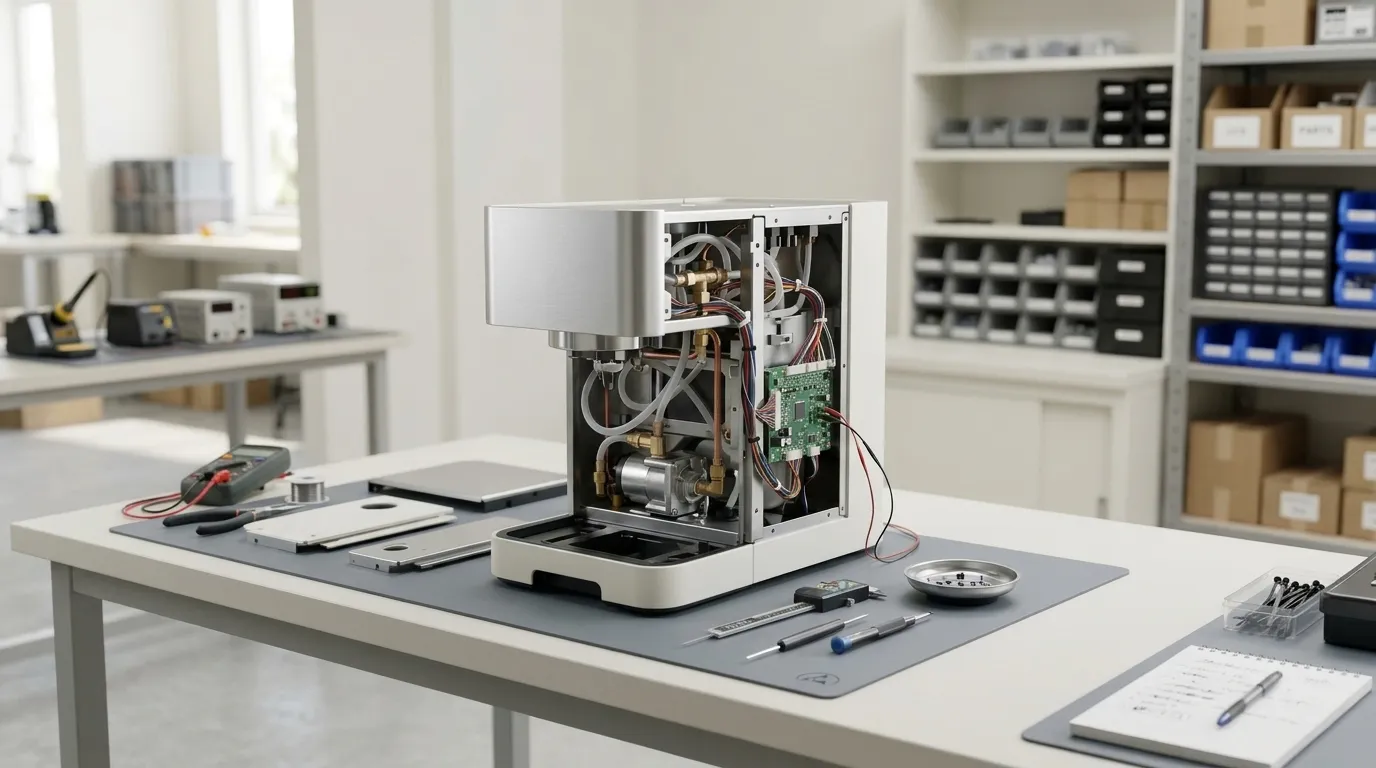
A physical model allows designers to verify size, handling, assembly, materials, and operation. Engineers are able to check interacting components, such as motors, fans, switches, seals, and control panels. A process plan aids in making informed changes by teams.
Yanmee is a supporter of appliance projects that include CNC machining, 3D printing, vacuum casting, sheet metal fabrication, surface finishing, and low-volume manufacturing. The right mix varies based on the product, test objectives, material requirements, and its application.
What is Home Appliance Prototyping?
Home Appliance Prototyping converts a computer-based idea into a tangible component or system to test. Teams can construct an appearance model, a fit-check sample, or a working unit of parts of their choice. Every prototype ought to respond to a specific engineering question.
Concept to Engineering Model
The development of the concept of Home Appliances begins with the purpose of the product, the needs of the user, size restrictions, and key features. CAD models are then developed by designers to specify shapes, mounting points, wall thicknesses, and interfaces to parts. These models are reviewed by engineers prior to parts making. A prototype can assist in verifying:
- Outer form, ratios, and texture.
- Access, user comfort, grip, and button travel.
- Clearances of motors, wires, circuit boards, and fasteners.
- Air paths, vents, and openings for heat release.
- Assembling order, access to screws, and service requirements.
These checks assist Appliance Product Design and assist teams in identifying clashes that might be overlooked in digital models.
Selecting the Appropriate Prototype Process
The manufacturing process influences the strength of parts, quality of the surface, lead time, and cost. Various processes can be used in a project as the design progresses to functional testing.
Early Design Checks Through 3D Printing
3D printing is appropriate for complex shapes, fast checks of the fit, and repeated design modifications. SLA is capable of making smooth components to be checked in terms of appearance, whereas SLS nylon can withstand more rigorous fit and handling tests. Printed materials are not necessarily a good behavior of production plastics, and therefore test limits should be kept clear.
CNC Machining of Precise Parts
CNC machining is used to cut parts out of solid metal or plastic stock. It is effective for brackets, motor mounts, knobs, control panels, and housings that require precise holes or mating surfaces. Depending on load, heat, finish, and use, aluminum, ABS, POM, and polycarbonate can be used in various parts.
Critical dimensions and tolerances should be specified in drawings for tight interfaces. A tolerance of 0.1 mm might be appropriate in general features, whereas precision fits might need a smaller tolerance. The right value is based on the design and production process.
Vacuum Casting and Sheet Metal Fabrication
Vacuum casting may be used to make small batches of plastic-like components based on a master part. It assists teams in comparing color, texture, and assembly prior to investing in injection mold tooling. Sheet metal fabrication is used for chassis, covers, brackets, and support frames. Structural checks are made by laser cutting, bending, welding, and finishing of parts.
Home Appliance Prototypes
Home Appliance Functional Prototypes are constructed to test the chosen features under specified conditions. They can be working hinges, rotating components, airflow routes, controls, or assembled mechanical components. A prototype does not necessarily indicate that a full-fledged appliance is safe and fit to be sold.
Material and Thermal Considerations
The choice of material must mirror anticipated temperature, force, moisture, cleaning agents, and contact conditions. ABS is used on housings, whereas polycarbonate is impact resistant and clear. Aluminum offers a lightweight, stiff material in the form of brackets and heat-related components. Nylon accommodates wear or load-bearing characteristics, but dimensions may be influenced by moisture absorption.
Check operating temperatures against the heat limits of the material used in parts close to heaters or motors. Check cable routing, ventilation, insulation, and inter-part gaps. Electrical safety and compliance testing must be based on relevant product standards, and appropriate equipment should be used.
Appliance Design Testing and Validation
Appliance Design Validation verifies a prototype to agreed design requirements. Home Appliance Design Verification is used to verify that certain dimensions, features, and requirements are in line with approved drawings or specifications. The two activities are to be scheduled prior to testing.
What Engineers Should Test?
Household Appliances Prototype Testing may involve:
• Dimensional checking of holes, slots, walls, and mating surfaces.
• Fit and assembly inspection of screws, clips, seals, and covers.
• Mechanical checks for movement, vibration, load, and wear.
• Airflow inspections around fans, filters, and ventilation openings.
• Color, texture, scratches, and visible defect surface inspections.
Written test steps and pass criteria should be used in Appliance Performance Testing. An example of a fan housing test could be a clearance, vibration, and airflow test under specified operating conditions. A hinge test can count the number of opening cycles and verify looseness or cracking. Test configurations must be as realistic as possible.
Record failures, measurements, and design changes per build. This simplifies the process of comparing revisions as well as ensuring that the changes addressed the initial issue.
Design Before Production
Home Appliance Engineering should consider manufacturing limits early, rather than after prototype approval. A design-for-manufacturing inspection verifies wall thickness, tool access, draft angles, fasteners, number of parts, and assembly operations. It is also able to determine features that add machining time or make it difficult to mold.
Write a Clear Prototype Brief?
To have an accurate quotation, supply the manufacturer with:
- 3D CAD files, preferably STEP or IGES, and available 2D drawings.
- Material, finish, color, quantity, and target delivery date.
- Critical dimensions, tolerances, and inspection requirements.
- The purpose and the anticipated testing conditions of the prototype.
This data assists engineers in choosing appropriate processes and design inspection. Yanmee also offers quick prototyping of design reviews, functional samples, and low-volume production.
From Prototype Results to Better Product Decisions
Consumer Appliance Prototype Development is a recurring process: build, inspect, test, revise, and test. The round ought to concentrate on the risks that are known rather than altering numerous features simultaneously. This assists teams in knowing what changes are beneficial to performance or create new issues.
Practical information, like easier cleaning, quieter operation, easier access to filters, or easier assembly, is often the source of Appliance Product Innovation. Prototype outcomes assist teams in evaluating these concepts prior to production tooling. When the design is stable, pilot builds have the ability to verify part consistency and the assembly process prior to large production runs.
Conclusion:
A good appliance design should not just be on the CAD screen. Home Appliance Prototype Development provides product teams with a realistic approach to test fit, materials, assembly, and performance prior to making a tooling commitment. Each prototype is more valuable with clear test goals and helpful engineering feedback.
Get in touch with Yanmee and talk about your appliance idea, provide CAD files, and select an appropriate path between prototype testing and low-volume production.
- PREV: Null
- NEXT: Null
Talk to the Manufacturer, Not a Middleman
Resources & Insights
-
Blog
Household Appliance Prototyping Services: From Concept to Market-Ready Products
2026-10-26By -
 Blog
Rapid Prototyping 3D Printing- Methods, Materials, Process and How to Choose
2026-10-23By -
 Blog
Sheet Metal Forming - Processes, Materials, Thickness and Design Guide
2026-10-23By -
 Blog
Low Volume Appliance Manufacturing Methods and Processes
2026-10-23By


